Mobile repairs and tyre replacement
For a tyre change or brake repair, send the registration and describe the problem. If the car has a warning light, provide the dashboard message where possible.
Browse repair services
Scotland
Mobile car and light van support in Glasgow. Ask about car diagnostics, battery and starting faults, servicing and mobile tyre fitting at your location.
Ask about car diagnostics, a battery assessment or mobile tyre replacement in Glasgow. Include the full postcode, tyre size if relevant and any access restrictions so a suitable visit can be assessed.
For a warning light or starting problem, describe the symptoms and share your vehicle registration. For a puncture or tyre replacement, include the tyre size and tell us where the car or van is parked.
We check the postcode, safe access, technician availability and any parts or tyres needed for the visit.
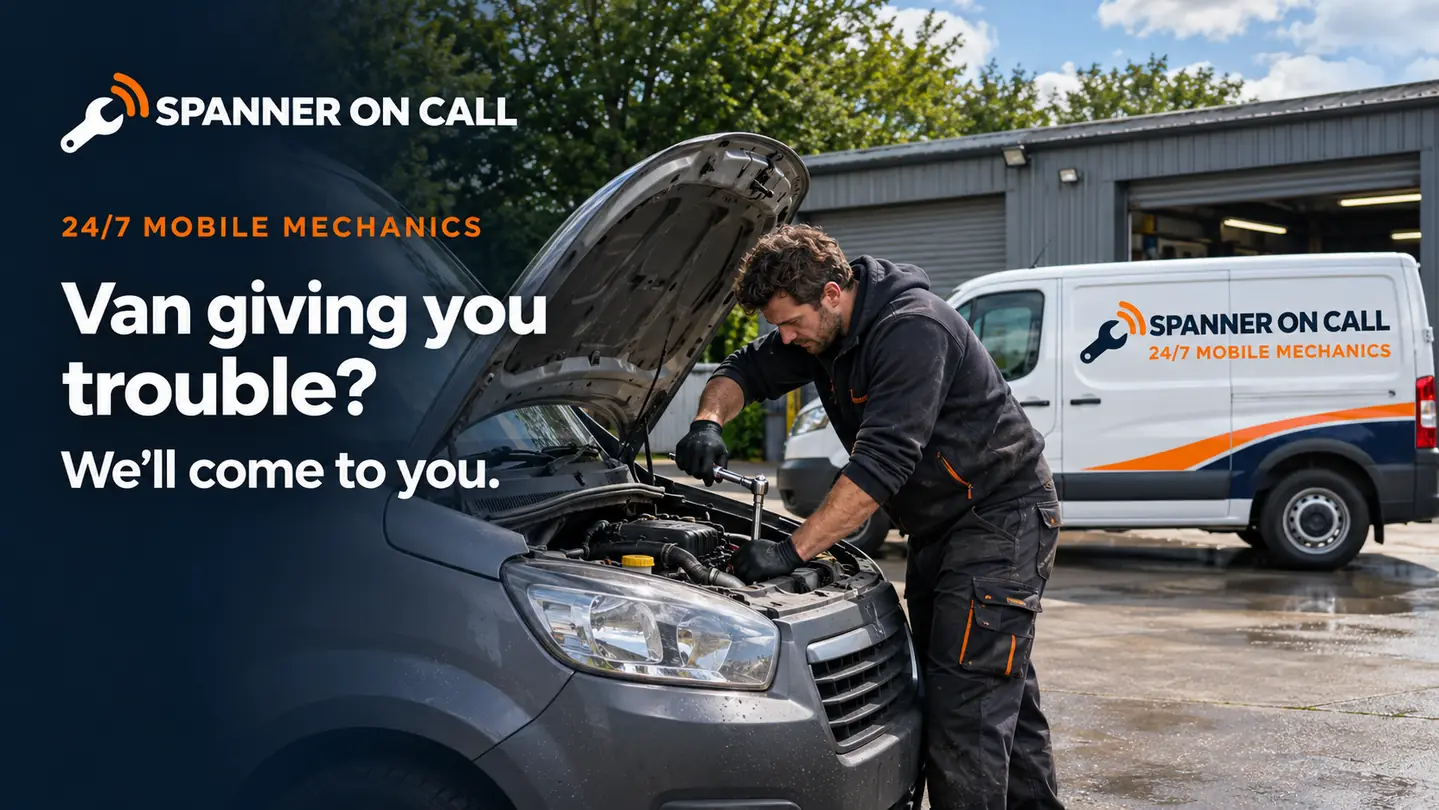
For a tyre change or brake repair, send the registration and describe the problem. If the car has a warning light, provide the dashboard message where possible.
Browse repair servicesFor shared or managed parking, check whether on-site work is allowed and whether there is a bay next to the vehicle. Scottish coverage is limited to Glasgow and Edinburgh.
For a mobile mechanic in Glasgow, tell us whether the vehicle is outside a home, at a work unit or in shared parking. A parking bay near a tenement entrance can be convenient for reaching the car but leave little room alongside it. Around areas such as Partick, Shawlands or Finnieston, describe the surface and where the service van can stop. If your own address differs from the car’s current location, use the vehicle’s actual postcode for the enquiry.
If you are in a city-centre car park, tell us its name, vehicle entrance and the level. Check who manages it and whether the operator allows work on site. Glasgow City Council parking information can help with council-managed restrictions. For a private site, ask the operator directly. A garage below a building may require a height clearance check even if the customer’s car has been able to enter.
Glasgow drivers seeking mobile tyre replacement should send the sidewall size from the affected tyre, the vehicle registration and whether there is a locking wheel nut key. If you moved off the road and are now at a filling station or a car park, give the current location and the person who can meet the technician. For servicing or electrical diagnostics at a depot, give the gate reference and hours when the vehicle will be available.
Scottish service coverage is limited to Glasgow and Edinburgh. If your enquiry follows a journey towards Glasgow on the M8 or another route, tell us where the vehicle is currently parked rather than relying on the motorway number alone. We check the specific location, required work and technician availability before agreeing any visit. Consult the motorway tyre page for the details to give from a suitable stopping location.
A mobile diagnostic visit starts with what the driver has noticed. An engine management light may appear while the car still feels normal, or it may come with rough idling, a misfire, poor acceleration or unusual fuel consumption. Give the exact dashboard message, when it first appeared and whether it has been steady or intermittent. A photograph of the instrument panel taken while safely parked can capture a message that disappears when the ignition is switched off.
A diagnostic scan can retrieve fault codes and show which vehicle systems have reported a problem. A code is a starting point for investigation. For example, a code that points to air flow might be related to a sensor, a wiring connection, an intake leak or another fault. The technician considers the symptoms alongside readings and checks available on the vehicle. Recent work, a replacement battery, water ingress or a service just before the problem started can change which checks make sense.
When asking about car fault finding, say whether the problem appears from cold, after the engine warms up, on a particular journey or under load. If a garage or recovery operator already scanned the vehicle, share the code and any findings. Some problems can be confirmed at the visit, while repeatable intermittent faults and checks requiring workshop equipment may need a further appointment. The aim is to identify sensible next steps and explain what has been established before you decide on repair work.
A car that will not start can have a weak battery, a charging problem, a starter fault or another issue entirely. Describe which lights come on, whether you hear a single click or repeated clicking, and whether the engine turns over without firing. Say if the car has been standing for a while or whether it started after an earlier battery boost. Those details help a mobile auto electrician or mechanic understand what to assess.
Auto electrical fault finding can include battery condition, charging output and accessible starter, sensor or wiring checks. Intermittent battery drain needs extra context. Tell us how long the car is usually parked before the fault returns, whether anything was recently installed and whether any lights stay illuminated after locking. If a battery has been replaced more than once, send the dates and any previous test results.
Battery replacement, alternator or starter motor work and minor wiring repairs depend on the vehicle and the suspected fault. A replacement battery must match the specification, and some vehicles need a registration or reset step. If your vehicle is a hybrid or EV, state the exact make, model and fault. Low-voltage batteries and charging warnings can involve different systems, so we check that the requested work is suitable before making arrangements.
For mobile brake pad or disc replacement, tell us whether the issue began with a dashboard warning, noise, vibration or an inspection report. The technician can consider whether pads, discs or another component needs attention and what parts are correct for the vehicle. Front and rear parts often differ, and model names alone can cover several braking systems. Give the registration and, if known, the axle the garage or inspection identified.
A clutch repair enquiry can start with slipping under acceleration, a pedal that feels different, difficulty selecting gears or a fluid leak. Those symptoms may relate to the clutch, hydraulics or another part of the drivetrain. Mobile clutch replacement depends on the car or van, the equipment required and the space available. Share the gearbox type and the latest inspection findings if you have them. Full engine replacement is outside our mobile service, and larger jobs may need a workshop even when initial checks can be carried out on site.
Throttle body cleaning or replacement may be considered if diagnosis points to that part. Unstable idle or sluggish response can also be connected to an intake, sensor or electrical issue. Tell us when the symptoms occur and send any codes from a previous scan. On vehicles that require it, the mechanic can assess whether a relearn or adaptation can be carried out with suitable equipment. For any of these jobs, the mechanic needs enough working room and suitable ground before agreeing to proceed.
A mobile car service can be useful if the vehicle is due for maintenance and you have somewhere suitable for the mechanic to work. Provide the registration, approximate mileage and the most recent service date. If you know which items were changed previously, mention them. A warning light, oil leak or unusual noise should be raised separately so the mechanic can tell you whether the visit needs diagnostic time in addition to scheduled servicing.
An interim service typically focuses on frequently checked items and can include an engine oil and filter change where appropriate. A full service can involve additional filters, spark plugs or other scheduled work, depending on the engine and service history. Ask what is included for your vehicle before booking. If you are comparing prices, check that both quotes cover the same parts, fluids and level of inspection.
Mobile servicing is an option for commuter cars, family vehicles and light vans with suitable parking. If a van has to return to a round or shift, tell us its available time window before agreeing a visit. For a fleet or more than one vehicle at an address, provide the registrations and access times separately. That lets the team check which parts and time are needed for each job.
A mobile tyre fitting enquiry needs the vehicle registration, the tyre size and the location. The size is printed on the sidewall and may differ on the front and rear axles. Tell us which wheel is affected, whether you need one tyre or several, and whether you have the locking wheel nut key. If you have an existing tyre pressure warning, include when it started and whether a workshop has already checked it.
A tyre fitter can assess whether a puncture is suitable for repair or whether the tyre should be replaced. Tell us if you noticed a cut or sidewall damage, heard an impact or have driven after noticing the tyre was flat. We check availability for the required size and specification, plus a safe place to work. A tyre stocked for one model or axle does not automatically fit another, even if the vehicles look similar.
For an A-road or motorway enquiry, give the road number, travel direction, junction or named service area and exact parking spot. Mobile tyre changes can be considered at suitable service areas or other safe places off the carriageway, subject to local access and availability. A motorway breakdown needs a safe response first. Follow the Highway Code if you are stranded. When parked at a shop, business or service area, give the site name and any restriction on working there so the team can assess a visit.
Spanner on Call works with a wide range of makes and models. The make-and-model directory can help you identify your vehicle, whether you are enquiring about a Ford Transit, a Toyota Yaris, a Volkswagen Golf or a BMW 3 Series. Send the registration even if you have already provided the model, since model year, engine, transmission and trim can affect the work or parts needed.
For a work van, include the model and any relevant modifications or load. Tell us if there is an undertray, limited clearance because of how the van is parked, or a requirement to sign in with site staff. For a classic, imported or modified vehicle, explain what differs from standard and include a parts reference if one is known. Technicians assess the specific request before confirming a booking.
For electric and hybrid vehicles, share the wording of any charging or power-system message and whether the concern is routine service, tyres, brakes, the 12-volt battery or something else. What can be done on a mobile visit depends on the vehicle, the fault and the equipment available. If your model does not appear in the directory, the registration and a short description are still enough to start an assessment.
To ask for a mobile mechanic quote, start with the postcode, registration and exact location of the vehicle. Add the type of job you think you need, symptoms, any recent work and when the vehicle is available. If a garage or MOT inspection identified a problem, send the wording from the report. Mention if you already have parts so the team can check whether they are suitable and whether a fitting-only visit is an option for that job.
The price can depend on travel, the labour involved, the parts required and whether diagnosis is needed first. A straightforward scheduled service with a known specification is different from fault finding for a car that will not start. Where the cause is uncertain, clarify what the initial assessment covers and how any further repair or repeat visit will be priced. We check availability and explain the quote before you decide whether to book.
The visit needs more than a postcode. In a managed area, give the car park level or bay, access code or agreed meeting point, and any limits on the time the technician can stay. On private property, make sure there is permission to work. If the vehicle moves to a different spot after you enquire, update the location before an appointment is agreed. Where parking or equipment makes mobile work unsuitable, an alternative location or workshop may be the better option.
The first step is to match the visit to the information you provide. A vehicle that will not start might need diagnostic work first. A confirmed brake pad replacement may be planned around the right parts and safe access. If your preferred date is flexible, say whether mornings, afternoons or another agreed window are easiest, especially when the vehicle is used for work.
At the visit the technician checks that the location, vehicle and requested work fit what was agreed. A repair can sometimes reveal another issue once checks are under way. If this changes the scope, ask what has been found, what work is proposed and whether the parts or a further visit need to be arranged. If the mechanic cannot finish on site, the findings can still help you explain the situation to a workshop.
For a vehicle that needs to be moved, have a possible destination and its opening hours ready. Check whether your receiving garage can accept the car or van and whether it has any restrictions on access. If the vehicle has specialist loading requirements, describe them when arranging transport. Ask for the next step that fits the condition of your vehicle and your plans.
Our Scottish coverage is Glasgow and Edinburgh. Share the postcode and work needed so we can check availability for your location.
Send the registration, postcode and the work or fault you want looked at. For an agreed service or job with known parts, we may be able to quote for specific work. For an unclear fault, the first quote may be for diagnostic time. Ask whether labour, parts, travel or any follow-up visits are included before deciding how to proceed.
A driveway can suit many visits if the vehicle is accessible and the work can be carried out there. Tell us whether the surface is level and solid, if there is space around the affected wheel or bonnet, and whether another vehicle is blocking the approach. Certain repairs involve equipment that may require a workshop or a different location.
Same-day requests depend on the postcode, technician workload, parts and the type of work. Share your preferred time and whether you can be flexible. A quote or provisional time is different from a confirmed booking. If you cannot be at the vehicle during the visit, explain who can provide access and how the team can reach that person.
Ask when making the enquiry and provide the part brand, reference and the intended vehicle. A matching model name does not establish that the part fits every trim or engine. The technician needs to check that the part and proposed work are appropriate. Confirm the charges and what happens if the supplied part proves unsuitable before booking a visit.
Yes. Include the registration, van model and details of any modifications or unusual load. Describe whether the problem happens while parked, during a cold start or once the van is being driven. At a depot, state when the van will be on site. If you manage more than one vehicle, list each registration and issue separately.
Ask for both when requesting the appointment. A scheduled service has a defined set of items for the vehicle, while a warning light may need a separate diagnosis. Sharing the exact warning and current mileage helps us discuss what can fit in one visit and which parts may need to be arranged.
If the mechanic finds that the work requires workshop access or specialist equipment, we can explain what was found and which next step to consider. Before arranging onward transport, confirm that your chosen garage can receive the vehicle, note the opening hours and have the exact collection and drop-off points ready.
Start with the vehicle registration and tell us which wheel is affected. If you can safely see the markings, send a photograph of the sidewall on that tyre. Front and rear fitments can differ, so a photo of the unaffected wheel may show the wrong size. We check the specification and stock for the job before confirming a visit.
Tell us what happened before and after it appeared. Dates, photos, warning messages and previous repair notes are especially helpful for intermittent problems. If the vehicle stores a fault code, that may guide further checks. Some concerns need more investigation or a follow-up when the symptoms can be reproduced.
We also cover selected areas of England and Wales, and Edinburgh and Glasgow in Scotland.
View all service areas